

Land clearing & attachment selection
From Clearing
to Cleanup
Choose your land-clearing attachments around what needs to happen next: cut vegetation, work roots and stumps, gather loose debris, then prepare the surface for its next use.
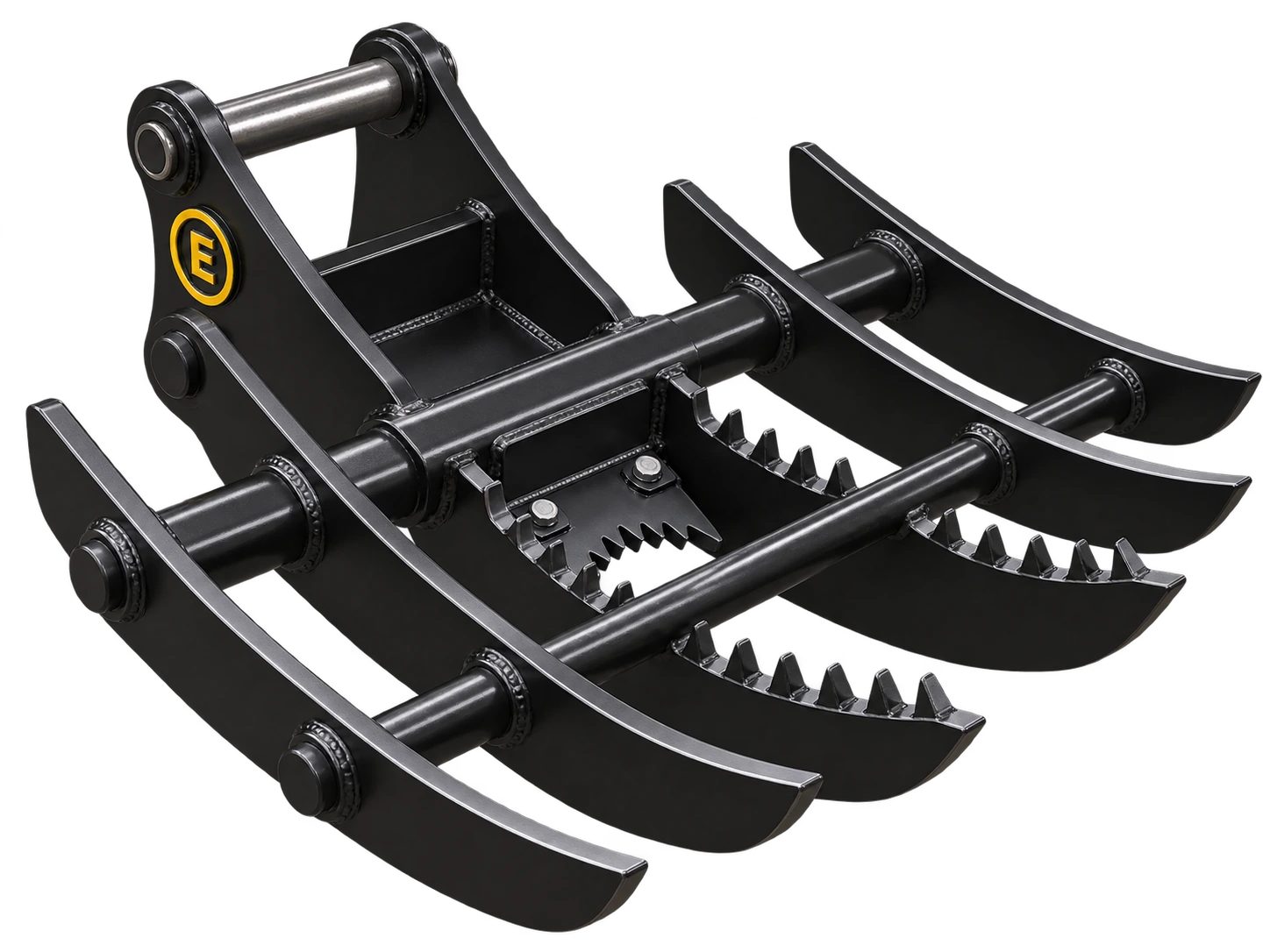
Start with the finished site in mind.
Opening a farm access lane, clearing a building footprint and cleaning up storm debris can call for different attachment lineups. Before choosing tools, identify what stays, what comes out and where the removed material will go. Describe the vegetation, stump sizes, ground conditions, access and intended finish when discussing the build with the shop.
Think in stages rather than expecting one attachment to handle every task. Not every property needs every tool below. A site covered in loose branches has a different starting point from one filled with rooted vegetation.
1. Cutting vegetation: consider the tree shear.
The Tree Shear is a starting point when the job involves cutting vegetation. East Attachments offers manual and hydraulic configurations; the appropriate setup depends on the carrier and application. Share the material you plan to cut, typical and largest stem sizes, and whether auxiliary hydraulics are available.
Cutting above-ground vegetation does not complete root removal or material disposal. Plan the next handling step before choosing the cutting tool. Our tree shear buying guide explains what to confirm before requesting a quote.
2. Roots and stumps: match the tool to the remaining work.
The Stumper is designed for severing roots and working stubborn stumps. Its available bolt-on rake provides another configuration for clearing debris. Describe the stumps and root systems you encounter most often so the shop can review the requested setup.
An Excavator Ripper is another tool to discuss when your work calls for concentrated ground engagement. Standard and sawtooth profiles serve different working preferences; review the ripper comparison with your ground conditions and application in mind. Do not select either attachment solely from how aggressive the model looks.
3. Gathering loose material: bring in the rake.
Once material is loose, an Excavator Rake can gather roots, brush and woody debris while allowing loose soil to pass between the tines. Width and tine configuration should reflect the carrier, access and material being collected. Wet soil and tangled roots may remain mixed together; an open rake does not guarantee clean separation.
If gripping material is also a priority, compare the Excavator Grapple Rake. Its integrated thumb adds a holding function to the rake. Describe whether most of your day is spent gathering scattered debris or picking up and placing larger pieces.
4. Picking and placing: choose a grapple or thumb setup.
The Excavator Grapple uses opposing curved jaws and a mechanical stiff-arm linkage for handling logs, brush and clearing debris. Its mounting bracket, linkage geometry and working clearance must be reviewed for the machine. The pictured product is a mechanical grapple, not a hydraulic rotating grapple.
A bucket-and-thumb setup is worth comparing when the same machine also needs to dig or carry loose material in a bucket. Consider how often you switch between excavation and picking tasks. Attachment selection should follow the work pattern, with machine capacity and compatibility confirmed for the complete setup.
5. Finish according to the next use.
After bulky debris is removed, the next task may be excavation, ditch shaping or surface cleanup. A digging bucket and a ditching bucket serve different purposes. Define the required finish before adding either to the quote. Clearing vegetation alone does not establish that a site is ready for construction or drainage work.
Buy for your recurring jobs first.
Prioritize the stage that takes the most time on your regular projects. If cutting is already handled, a shear may not be your next purchase. If roots and stumps dominate the workload, begin the discussion there. If debris is already loose, focus on gathering and handling. Plan attachment changes and material staging as part of the job rather than treating them as an afterthought.
Prepare a useful quote request.
- Excavator make/model and existing coupler information.
- Photos of the site, material and machine mounting area.
- Typical stump, stem or debris sizes and requested working width.
- Available hydraulic information for any hydraulic attachment.
- Delivery ZIP code, unloading arrangement and desired timing.
You do not need every measurement to start an inquiry. East Attachments will review fitment before fabrication. Use the measurement guides when preparing dimensions, and follow the machine and attachment operating instructions for the approved configuration.
Request a stumper quote → or tell the shop about your clearing project to compare the attachments that fit your work.