

Late-fall job planning
Before the Ground
Freezes
A blocked ditch, a soft access lane or an attachment waiting on parts can become a bigger problem when conditions change. Use the remaining workable days to review drainage, prepare access and get your equipment ready for the jobs ahead.
Plan around the ground, not just the calendar
Late November means different things across the country. Northern crews may already be working around frost, while southern crews may be dealing with rain and soft ground. Check local conditions and the project schedule before deciding what belongs on the immediate work list. A cold forecast alone does not establish whether a site is suitable for excavation.
Cost pressure also makes planning worthwhile. AGC’s November construction-cost reporting highlights rising material and freight costs and longer delivery times. Those industry-wide conditions do not determine an individual attachment quote, but they are a reason to confirm parts, fitment and delivery before a machine is committed to a job.
Start with where the water goes
Walk the site and review known trouble spots: sediment-filled ditches, debris around culvert openings, low areas beside travel routes and places where runoff crosses a working surface. Look at the outlet as well as the collection point. Moving water away from one location is not a complete solution if it creates a problem farther downstream.
Distinguish routine maintenance from changing the drainage layout. Restore an established channel only to its intended profile; do not assume that deeper or wider is better. New channels, altered outlets and work near streams or wetlands may need design review or approvals. Confirm the applicable requirements and utility locations before excavation.
Where a trapezoid bucket fits
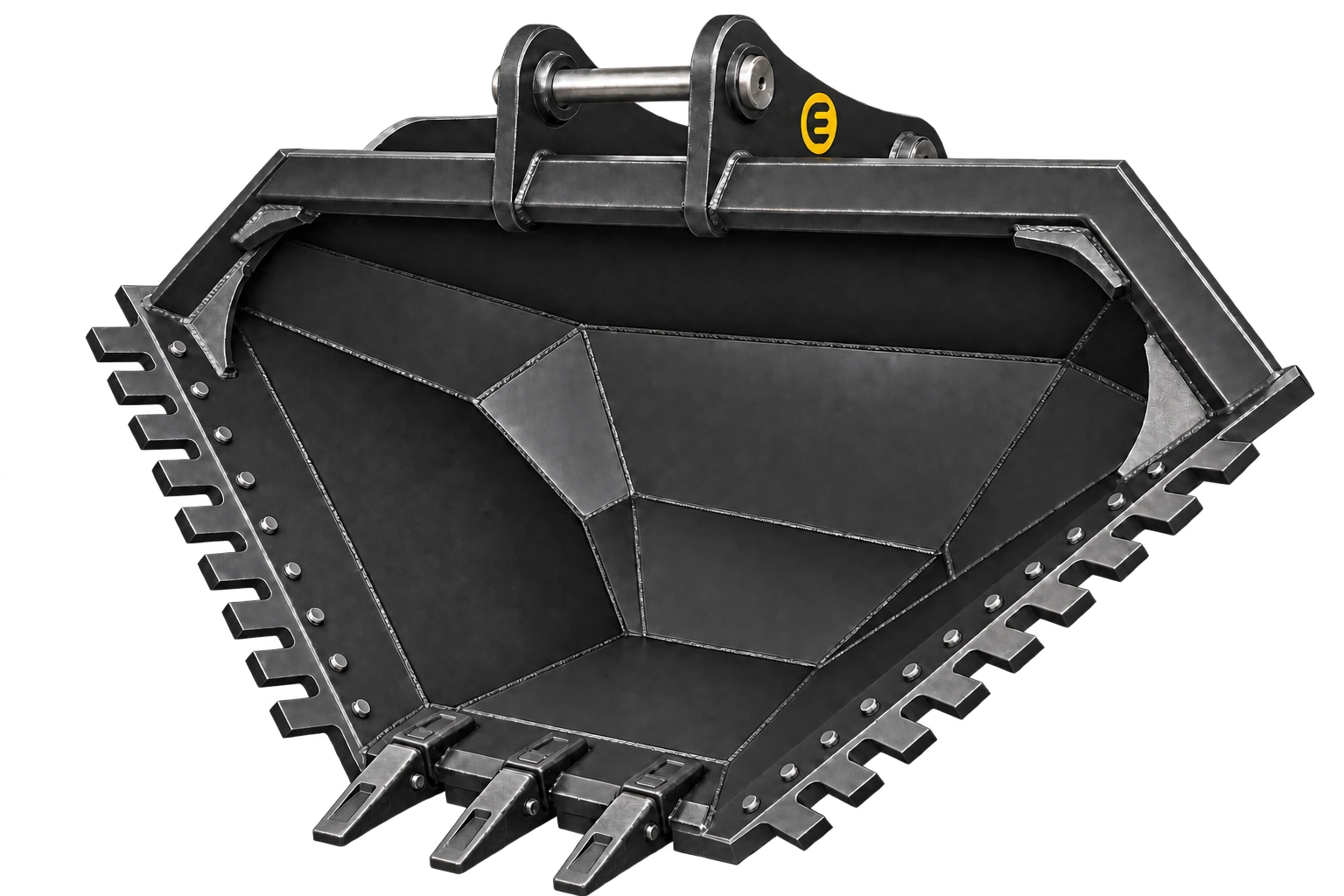
A trapezoid bucket is worth considering when the job calls for a repeatable, flared channel shape. Its profile can help form the bottom and sides together when the bucket matches the specified dimensions. That makes the required bottom width, depth and side slopes important purchasing information.
The bucket does not determine the drainage design. Flow requirements, soil stability, outlet conditions and erosion protection still need to be addressed in the project plan. Send the intended profile to the shop instead of selecting a bucket from overall width alone.
East Attachments trapezoid buckets are built for 1.5–70 ton machines, with configuration and fitment confirmed for the carrier. Available options include teeth or no teeth, extended wings and bolt-on serrated side cutters. Discuss the material and intended work before selecting them. For broader cleanup and shaping, a ditching bucket may be a better match.
Review access before bringing equipment in
Check the approach, turning area, unloading location and route to the work. Identify soft shoulders, ruts, standing water and slopes that could become harder to negotiate in wet or icy conditions. Plan where removed sediment and material will go so it does not obstruct the channel or travel route.
Make access decisions around the machine, delivery vehicle and site conditions. A firm-looking surface is not proof of adequate support. If the route is unsuitable, resolve that issue before scheduling equipment or an attachment delivery. Include unloading arrangements when reviewing freight and receiving requirements.
Inspect the attachments you expect to use
With the machine secured and the attachment safely supported according to the manufacturer’s instructions, review teeth, cutting edges, fasteners, pins, bushings and retention components. Check for damage, excessive movement or missing parts. Refer suspected structural or retention problems to a qualified technician before returning the attachment to service.
Clean off accumulated material so inspection is possible, and follow the applicable maintenance instructions for lubrication, hydraulic checks and cold-weather operation. Caterpillar’s cold-weather guidance emphasizes preparing equipment before freezing conditions arrive. Use your own machine’s operation and maintenance manual for the specific procedures and fluids it requires.
If wear is already visible, our bucket repair-or-replacement guide helps organize the questions to ask before ordering components or a new bucket.
If the ground is already frozen
Reassess the method rather than assuming the planned bucket will handle the changed conditions. A suitable excavator ripper may be part of a preparation-and-excavation sequence for hard or frozen material. Manufacturer guidance identifies frozen-ground preparation as a ripper application, but suitability still depends on the carrier, attachment and actual ground.
A trapezoid bucket is a profile-forming tool, not a guarantee of penetration through frozen soil. Confirm the proposed approach with the equipment supplier, protect identified utilities and follow site-specific excavation procedures. Do not use extra machine force to compensate for an unsuitable attachment or unsafe conditions.
A short checklist before the next job
- Review the drainage plan, channel profile and outlet.
- Confirm utility locations and any required approvals.
- Assess access, unloading and material-placement areas.
- Check attachment condition and required replacement parts.
- Confirm machine and coupler compatibility using the measurement guides.
- Allow for fabrication, freight, weather and holiday scheduling.
Trapezoid bucket lead time is approximately 10–20 working days after required measurement confirmation; freight transit is additional. Ask for current timing before committing to a project date. Share your machine make and model, channel requirements, coupler details and delivery ZIP code so the quote reflects the complete job.
Further reading
See Caterpillar’s cold-weather preparation guidance, Bobcat’s overview of ripper applications and AGC’s November construction-cost report for supporting maintenance, application and market context.