

Bucket maintenance & buying guidance
Repair or Replace?
When Your Excavator Bucket Needs More Than New Teeth
Worn teeth do not automatically mean a worn-out bucket. But fresh teeth cannot correct a damaged adapter, weakened shell or distorted hookup. Start with the condition of the complete attachment before deciding where to spend.
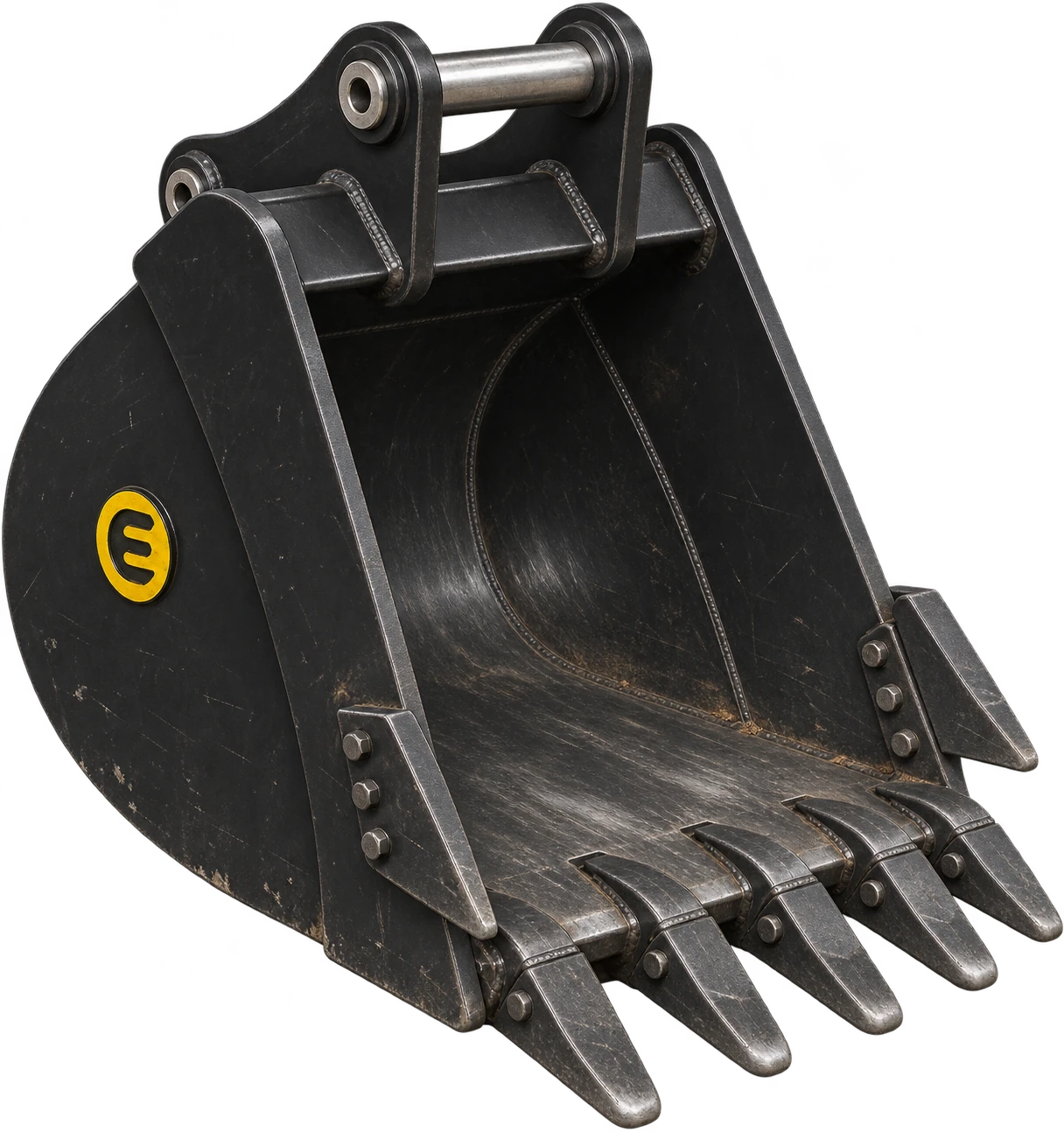
Protect the budget by identifying the actual problem
With equipment financing and operating costs putting pressure on contractors, keeping a serviceable bucket working can be a sensible investment. AEM’s November 2026 market outlook identifies expensive financing and uneven construction demand as continuing concerns. That makes a careful repair-versus-replacement comparison more useful than buying on appearance alone.
The goal is to restore suitable performance and dependable service. Compare the complete repair scope, expected remaining life, downtime and fit for your next jobs—not just the price of a set of teeth.
When replacing wear parts may be enough
Teeth, cutting edges and certain side cutters are intended to take wear. When the supporting structure remains serviceable, replacing the appropriate components may be all that is needed. Follow the component manufacturer’s wear limits and inspection guidance; there is no single replacement interval that fits every bucket and soil condition.
- Tooth wear: Check the tooth profile, adapter condition and retention system together. A new tooth must match its adapter and locking components.
- Cutting-edge wear: Assess both the replaceable edge and the material supporting it. A bolt-on edge cannot compensate for a damaged base edge or elongated mounting holes.
- Side-cutter wear: Check the cutters, fasteners and mounting areas. Confirm the replacement configuration before ordering.
For replacement excavator teeth, send the existing tooth code if readable, adapter photos, retention details and quantity. Appearance alone is not enough to establish compatibility.
Signs that call for a qualified inspection
Cracks, damaged welds, bent mounting ears, loose or damaged adapters, significant shell thinning and distorted cutting structures require more than a parts order. Excessive movement at the hookup also needs diagnosis: the issue may involve pins, bushings, bores or other components.
Take a bucket with suspected structural or attachment-retention damage out of service until a qualified technician evaluates it. Inspect only with the machine secured and the attachment safely supported according to the equipment manufacturer’s instructions. Photos can start a conversation, but they cannot certify structural condition.
A qualified repair shop can assess remaining material, alignment and a suitable repair procedure. Simply adding weld or plate without evaluating the underlying damage can leave the original problem unresolved.
When repair deserves a closer look
A localized problem may be repairable when the surrounding structure is sound, the mounting geometry can be restored and the bucket still suits the work. Ask for a written scope covering parts, preparation, fabrication or machining, inspection and any limits on the repair.
Include transport, removal and installation, and the cost of having the machine unavailable. Repeated repairs in the same area deserve particular attention: ask what caused the damage and whether the proposed work addresses that cause.
When replacement may be the better investment
Replacement becomes more compelling when damage or wear affects several major areas, previous repairs keep failing, restoring fitment requires extensive work, or the bucket no longer matches the application. A usable bucket can still be the wrong width, capacity or configuration for the jobs ahead.
There is no universal rule that repair must stay below a particular percentage of new-bucket cost. Compare a documented repair estimate with a like-for-like replacement quote, then consider expected service, downtime and future wear-part availability. Our custom excavator bucket cost guide explains the configuration details that affect a new build.
Choose the replacement around the job
A digging bucket suits excavation with replaceable teeth, while a ditching bucket serves cleanup and grading work. For a loader, review the capacity and cutting configuration of a loader bucket against the carrier and material. Avoid replacing an unsuitable configuration simply because it is familiar.
Confirm machine make and model, coupler details and required hookup measurements before ordering. Replacement attachment pins are sold separately; ask whether your existing pins remain suitable rather than assuming they can be reused. The measurement guides help organize the fitment information.
What to send before buying parts or a replacement bucket
- Machine make and model, bucket width and coupler information.
- Full-bucket photos plus clear views of teeth, adapters, edges, shell and hookup.
- Close-ups of damage, readable part markings and details of previous repairs.
- Material handled, typical work and the performance problem you are experiencing.
- Required quantity or replacement configuration, delivery ZIP code and target date.
Have a qualified repair provider assess structural damage. East Attachments can help confirm available replacement teeth and quote a bucket matched to your machine and work. Select tooth styles and bucket sizes may be in stock; ask a representative for current details. Custom digging, ditching and trenching buckets carry approximate lead times of 5–15 working days after required measurement confirmation, with freight transit additional.
Further reading
Caterpillar’s ground engaging tools guide explains the role of replaceable wear components. AEM’s November 2026 equipment-market outlook provides the broader economic context. Always use the applicable manufacturer’s instructions for inspection, wear limits and component installation.