

Bucket buying guidance
What Determines the Cost of
Custom Excavator Buckets?
A bucket price reflects more than its width. The machine, material, mounting arrangement and work you expect it to do all help determine the build—and the final quote.
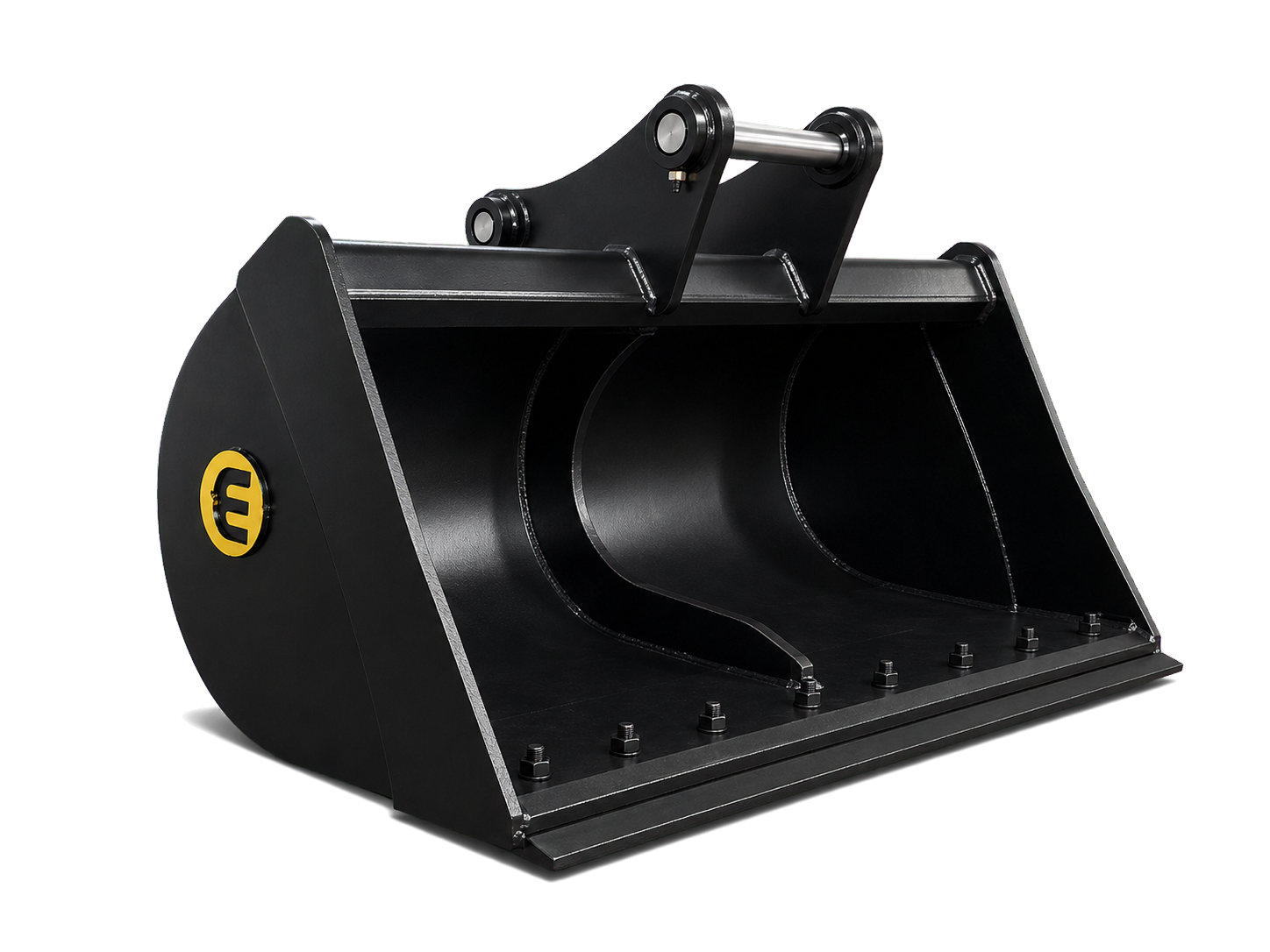
Why there is no single price for a custom bucket
Two buckets with the same working width can have different capacities, steel specifications, hookup arrangements and wear packages. A price comparison is useful only when those details are clear. East Attachments confirms pricing around your requested configuration and machine rather than treating width alone as the specification.
Start with the work: trenching, general excavation, ditch cleanup, rock handling or sorting. A digging bucket, ditching bucket and skeleton bucket solve different problems. Choosing the appropriate type is the first step toward a useful budget.
1. Size, capacity and machine class
Width, depth and shell profile determine how much material goes into the bucket and how much material it can carry. A larger build generally requires more steel, cutting and welding, but price does not increase by a fixed amount per inch. A narrow heavy-duty bucket can have a different cost structure from a wider cleanup bucket.
Specify the excavator make and model along with the material being handled. More capacity is not automatically better: the bucket must be appropriate for the carrier and intended application. Ask the shop to review your requirements before choosing dimensions solely on price.
2. Steel specification and wear protection
Steel grade, thickness and the placement of wear components affect both material requirements and fabrication. Abrasion-resistant material in high-wear areas, reinforcement, side cutters and heel protection can change the quoted scope. Ask which components use which materials instead of assuming a single steel description applies to every part.
The useful question is what your ground conditions require. Sand, abrasive soil, rock and general loose material do not place identical demands on a bucket. Describe the work so the shop can review suitable protection. Our AR400 steel guide explains the role of abrasion resistance in attachment wear components.
3. Fabrication and mounting complexity
A custom bucket involves cutting, forming, fitting and welding components into a complete assembly. Changes to the profile, reinforcement or mounting structure can add fabrication steps. A special hookup may also require different plates, bosses or machining from another bucket of the same width.
Tell the shop whether the bucket will mount directly to the excavator or work through a quick coupler. Include the coupler make and model if known. Final pin diameter, ear spacing, pin centers and clearances must be confirmed before fabrication. Photos help explain the arrangement, but they do not replace required measurements.
4. Teeth, edges, side cutters and pins
Compare the cutting and wear components included in each price. Tooth configuration, a bolt-on cutting edge, bolt-on side cutters and other available options can change the total. Replaceable components also affect how you maintain the bucket later, so consider access and replacement needs as well as the initial purchase.
East Attachments excavator bucket pins are sold separately. If you need replacement attachment pins, include them in the inquiry. For a tilting bucket, the hydraulic assembly adds another set of components to confirm; hydraulic hoses and lines are not included.
5. Freight and receiving arrangements
The bucket price and the delivered total are different figures. Shipment size and weight, destination and delivery access affect freight. Provide your ZIP code, address type and unloading arrangements so the quote can include the relevant delivery requirements.
Have a suitable method of unloading ready on delivery day. Review the shipping policy and confirm any liftgate or address-change request with East Attachments before arranging it. Shop pickup may be an alternative when practical.
6. Timing and the final agreed scope
Tell the team about your project deadline before approving the build. Digging, ditching and trenching buckets currently carry approximate lead times of 5–15 working days after required measurements are confirmed. Other bucket types can differ, and freight transit is additional. Confirm current availability and timing with your quote.
Changes after a configuration has been agreed can require a revised price or schedule. Establish the bucket type, width, hookup, options and delivery requirements together so everyone is comparing the same build.
How to compare two bucket prices fairly
Before choosing the lower figure, check that both offers cover the same working profile, material specification, mounting arrangement, cutting components and wear protection. Then compare separately supplied pins, freight, unloading needs, warranty terms and the lead-time start point.
For example, a bucket-only quote with standard cutting components is not directly comparable to a delivered quote that includes optional wear protection and replacement pins. The difference may come from the scope rather than the base bucket price. Review the written warranty instead of assuming every component has the same coverage.
What to send for a useful price estimate
- Excavator make and model.
- Bucket type and desired width, or a description of the job.
- Material and ground conditions.
- Quick coupler details, if fitted, and photos of the existing hookup.
- Requested wear options and whether you need pins.
- Delivery ZIP code, unloading method or pickup preference.
- Your target date and contact information.
You do not need every measurement to start. East Attachments can identify the remaining details before final fitment and fabrication. For a step-by-step comparison checklist, read What Goes Into a Custom Excavator Bucket Quote? or visit the measurement guides.