

Materials & construction
AR400 Steel:
Built for the Wear
of Heavy-Duty Work
Dirt, gravel and rock work against an attachment every cycle. AR400 helps wear surfaces stand up to that abrasion while offering a practical balance of hardness, toughness and fabrication.
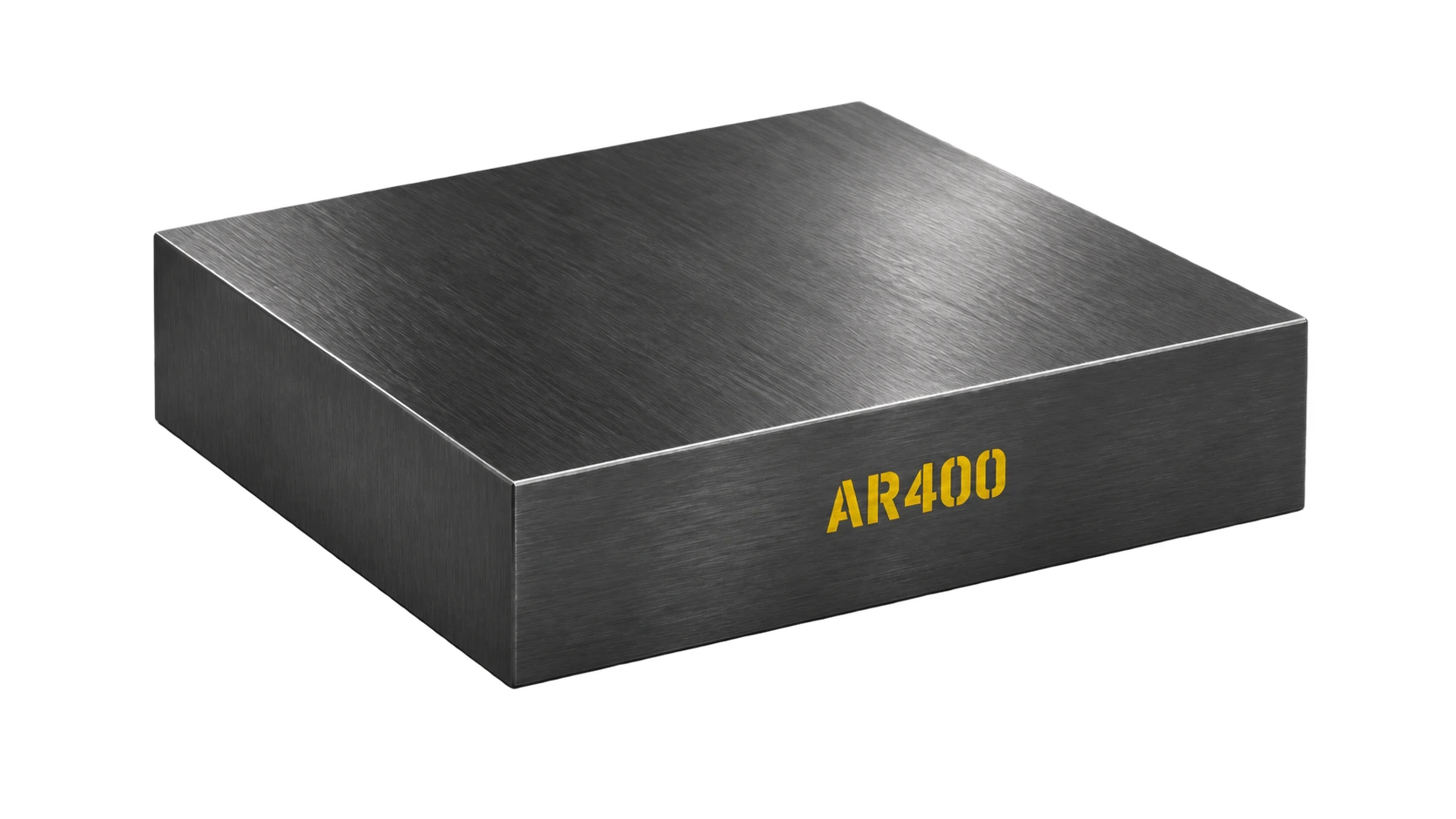
What does AR400 mean?
AR stands for abrasion resistant. The 400 refers to a nominal Brinell hardness of about 400 HBW—not a thickness, weight rating or universal strength guarantee. AR400 describes a class of wear plate; chemistry, hardness limits and guaranteed properties vary by producer, product and thickness.
For example, SSAB lists its AR400F at 360–444 HBW, while its branded Hardox® 400 plate has a specified range of 370–430 HBW. These are different product specifications, not interchangeable promises for every plate sold as AR400. Check the supplier’s data sheet and material certification for the actual steel.
Why hardness matters in the dirt.
As abrasive material slides and scrapes across a bucket or liner, it gradually removes metal. A hardened wear plate resists that process better than ordinary mild steel in many abrasive applications. Through-hardened plate carries its wear-resistant properties into its thickness rather than relying only on a thin surface treatment.
AR plate is commonly produced using controlled heat treatment, including quenching and tempering; some products are supplied as-quenched. The resulting balance of hardness and toughness is why this steel family is widely used in earthmoving and material-handling equipment.
Why choose AR400 over ordinary steel?
AR400 is often the better choice where abrasion is the main reason a component wears out. Mild structural steel such as ASTM A36 serves a different purpose: general structural work. A36’s specified tensile properties do not make it a dedicated abrasion-resistant plate.
- Protect working surfaces. Wear-resistant material can slow metal loss in the areas that scrape through abrasive loads.
- Reduce replacement interruptions. Longer wear life can mean fewer liner changes and less repair downtime, depending on the application.
- Balance wear performance and fabrication. AR400 can be a practical option when a component needs forming and welding as well as resistance to wear.
The relevant cost is the installed part over its working life: material, fabrication, repairs and downtime. There is no universal service-life multiplier. Soil composition, impact, operating technique, thickness and attachment design all affect the result.
How does it compare with other choices?
| Material | Where it fits | AR400 comparison |
|---|---|---|
| Mild structural steel, such as A36 | General structures and components specified around structural properties. | AR400 is purpose-built for abrasive wear surfaces. Structural parts still need their own load and fatigue review. |
| AR400 wear plate | Wear parts requiring a useful combination of abrasion resistance, toughness and fabrication. | A balanced choice; confirm the particular producer’s properties and processing requirements. |
| AR450 / AR500 wear plate | Applications where greater hardness and abrasion resistance justify the material and processing choice. | AR400 may suit forming and impact-related requirements, but tougher premium higher-hardness grades also exist. Compare actual data rather than assuming harder always means brittle. |
Where it earns its place on heavy equipment.
Typical uses include bucket liners, wear plates, truck-bed liners, chutes and hoppers. These components repeatedly contact moving earth, aggregate or other abrasive material. Clifton Steel also lists loader cutting edges among its AR400 applications; the correct edge material and geometry still depend on the work.
A heavy-duty attachment does not have to use one steel everywhere. A bucket shell, wear strip, tooth, pin and mounting structure perform different jobs. Material selection should account for wear, impact, bending and the load path—not just the largest hardness number.
Fabrication is part of performance.
AR400 can be cut, formed and welded with appropriate procedures. Follow the steel producer’s instructions for bend radius, cutting, preheat, consumables and heat input. Excessive heating or an unsuitable process can change the properties that made the plate useful in the first place. A harder plate is also not automatically a stiffer plate or permission to reduce thickness without engineering review.
What should you ask before ordering?
- Which parts use abrasion-resistant steel, and which grade and thickness are specified?
- Is your main problem sliding wear, gouging, impact or deformation?
- Are wear components replaceable, and how are repairs handled?
- Does the complete attachment suit your machine, material and operating conditions?
When comparing buckets or other heavy-duty attachments, bring photos of worn areas and describe your typical work. Ask East Attachments to confirm the material specification for the build being quoted. This article explains AR400 generally; it does not mean every component or product uses the same grade.
Technical references.
Manufacturer information: SSAB AR400F; SSAB abrasion-resistant steel; SSAB ASTM A36; Hardox® 400; Clifton Steel Tensalloy™ AR400. Brand references illustrate material options and do not identify East Attachments’ steel supplier.