

ATTACHMENT SELECTION
Skeleton Bucket vs.
Digging Bucket
Are you moving the whole load, or separating what stays from what falls through? Start there when choosing your next bucket.
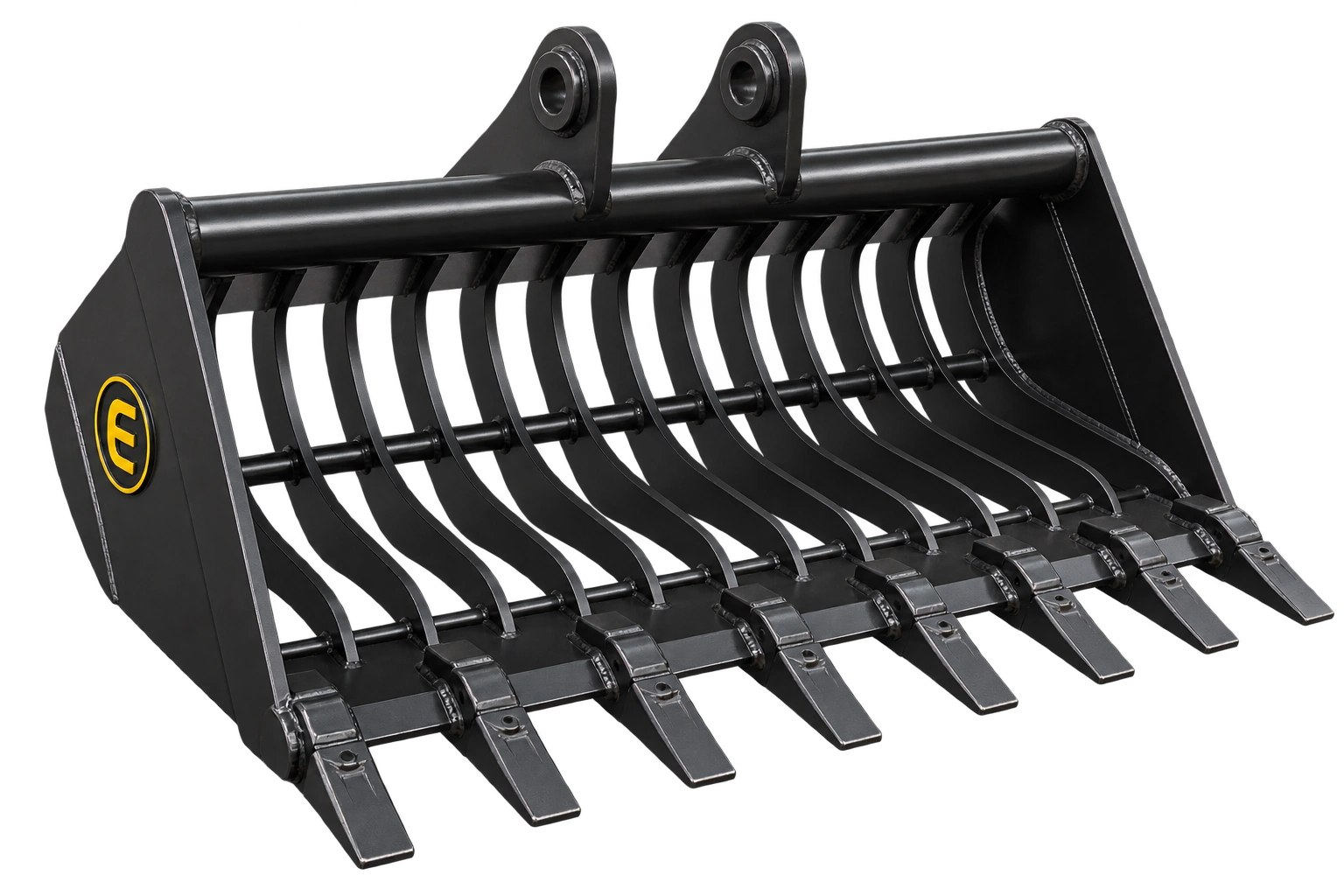
When sorting is part of the job.
A skeleton bucket is worth discussing when the project calls for separating rock or larger debris from loose soil. Its open ribs make that separation possible. The material you want to keep—and the material you want to release—should guide the conversation about rib spacing.
For example, a cleanup project may involve a mixed pile where you want to retain larger pieces while allowing loose fines to fall through. Describe that goal clearly when requesting a quote. “Sorting a mixed stockpile” tells the shop more than simply asking for a bucket with openings.
Rib spacing is a selection detail, not a promise of an exact finished material size. Share photos, describe the mix and explain your required result so East Attachments can review the application.
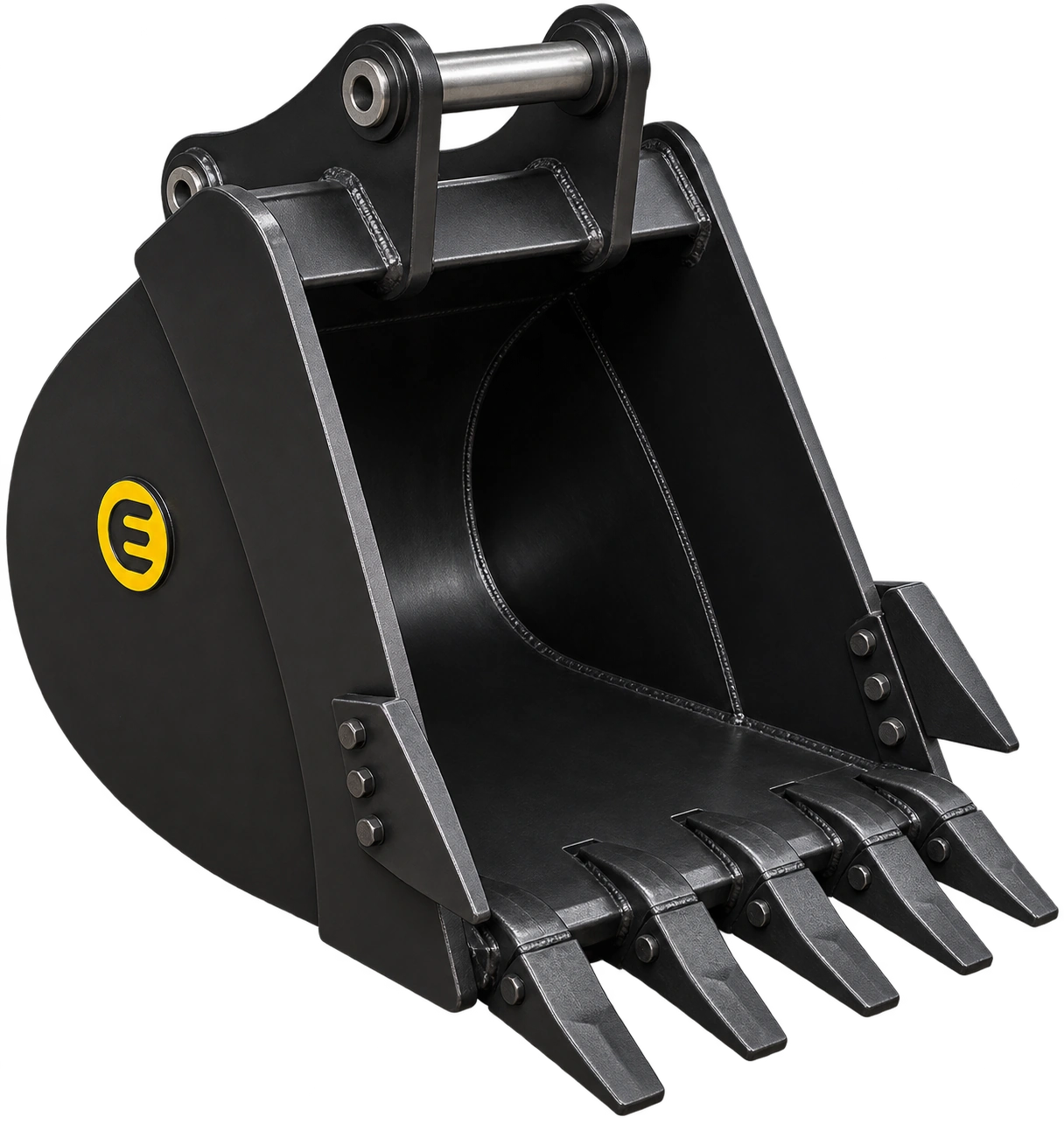
When excavation comes first.
A digging bucket is the starting point when the main task is digging and moving material as a load. Its solid shell holds smaller material along with the rest, rather than intentionally letting it pass through an open body.
Tell the shop whether you are excavating a footing, moving soil or tackling another digging task. Include the ground conditions and desired working width. Those details help frame a bucket inquiry around the work instead of appearance alone.
East Attachments offers the severe-duty digging bucket with configuration choices including bolt-on side cutters and a 2-in-1 removable tooth bar. Discuss the options alongside the machine and application before deciding on the build.
Match the bucket to the result.
| Consideration | Skeleton bucket | Digging bucket |
|---|---|---|
| Main objective | Separate larger material from loose fines. | Excavate and move material together. |
| Bucket body | Open ribs create spaces for smaller material to pass through. | A solid shell retains the load instead of screening it. |
| Selection details | Working width, rib spacing and the material you want to retain. | Working width, ground conditions and the excavation task. |
| Fitment | Confirm the excavator and mounting measurements. | Confirm the excavator and mounting measurements. |
One project can involve both tasks.
Consider a job that starts with excavation and ends with sorting the removed material. Write those as separate steps in your project description: first remove the material, then decide what needs to be separated or reused. That gives the shop a clearer basis for discussing whether one attachment or a combination suits the work.
A useful question is: “Do I want the smaller material to stay in the bucket?” If the answer is yes, retaining the load matters. If the answer is no, explain what you want to sift out and what should remain.
Prepare a useful quote request.
- Provide the excavator make, model and operating weight.
- Identify direct pin-on or quick-coupler mounting, including coupler details where applicable.
- State the desired bucket width and describe the ground or material.
- For a skeleton bucket, include the requested rib spacing or ask for help reviewing it against your sorting goal.
- List configuration preferences and include clear project photos.
- Supply the requested fitment measurements and delivery or pickup preference.
For the skeleton bucket, available choices include teeth or a toothless configuration, a bolt-on cutting edge when toothless, and bolt-on side cutters with teeth. Review the skeleton bucket product page for the current options.
Pins are sold separately for both buckets. East Attachments confirms the required measurements before fabrication; estimated lead time starts after those measurements are confirmed.
Need help gathering the dimensions? Read Bucket Fitment Measurements Before Ordering and use the illustrated measurement guides.