

Loader cleanup & attachment selection
Put Your Loader
to Work on Cleanup
Brush, branches and exposed root debris call for a different approach than a pile of loose soil. Start with the material, the space you work in and the loader hookup before choosing a rake.
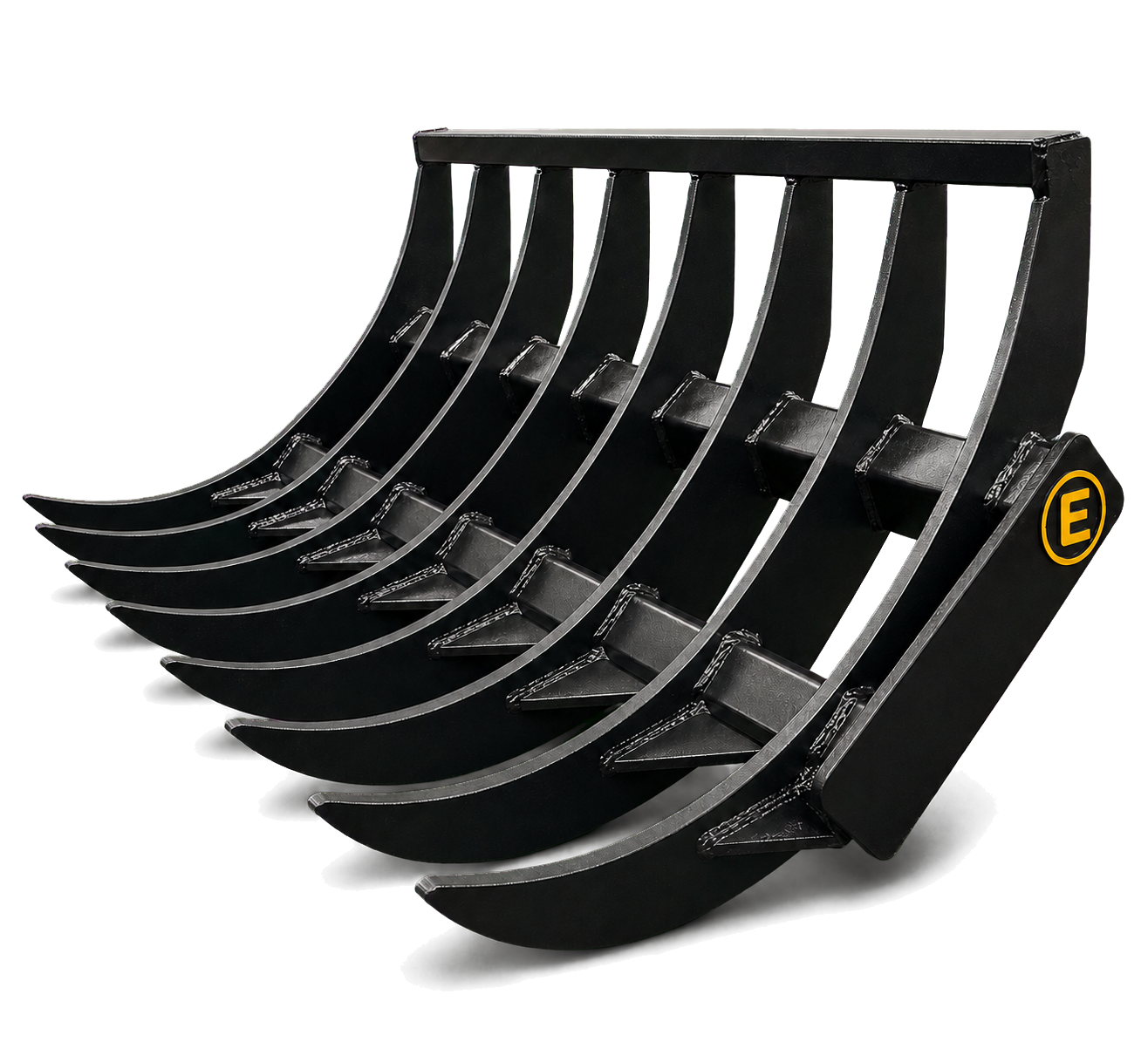
Match the rake to what is left on the ground.
After cutting or clearing, the next job is often gathering loose brush, branches and exposed roots into manageable piles. The East Attachments Pin-Mounted Loader Rake uses deep curved tines, welded supports and an open frame for this kind of land-cleanup work.
The spaces between the tines allow loose soil to fall through while larger debris is gathered. How well material separates depends on its size, moisture and how tightly it is tangled together. Wet soil and small fragments may stay with the pile or pass through differently; describe your actual material when discussing the configuration.
A rake is worth considering when bulky clearing debris is the main task. For loose soil, sand or gravel that needs to stay contained, compare a front-end loader bucket. For work that requires clamping material, discuss an appropriate attachment with the shop—the pin-mounted rake shown here has no hydraulic grapple.
Plan the handling route before the pile grows.
Decide where material will be gathered, where it can be staged and how it will reach its final destination. Leave room for turns and keep the route clear of people and obstacles. Long branches and irregular debris can extend beyond the rake, so include their typical lengths when describing the job.
Do not treat the rake as a rated lifting device or assume that a pile it can gather is a load the loader can safely carry. Confirm the intended handling method and machine limits for the proposed attachment. Follow the loader and attachment instructions, and stop and secure the equipment before removing entangled material.
Choose dimensions around the loader and the site.
The product is built to requested width and loader specifications. Begin with the width you need, then share the loader dimensions, narrowest access points and working space. The widest rake is not automatically the most useful choice: clearance, visibility, attachment weight and the loader’s approved limits all belong in the review.
Tine thickness is available up to 3 inches, with serrated tines offered as an upgrade. Tell the shop whether you mainly handle light brush, tangled branches, exposed roots or mixed debris. Confirm a suitable thickness and whether the serrated option fits that work instead of selecting solely by the largest available dimension.
Ask for the proposed overall width, height, tine reach, tine spacing and attachment weight before approving the build. Those dimensions are not universal catalog values. Tine spacing affects what can pass through; the complete rake geometry also needs to work with the loader’s movement and clearances.
Confirm the hookup, not just the model name.
Send the loader make and model, clear front and side mounting photos, and the required hookup measurements. Identify any existing coupler and include its make, model and photos. A pin-mounted rake must match the actual connection; a matching width or a familiar loader brand does not establish compatibility.
Use the Wheel Loader Pin-On Rake Guide to start the inquiry and the loader measurement guidance to discuss the mounting arrangement. Confirm the correct measurement references with East Attachments before taking final dimensions, including pin-hole diameters, mounting-ear clearances and center-to-center spacing where applicable.
Have the shop review mounting geometry, movement clearance and any required pins or hardware together. Confirm what the quote includes and what must be supplied for installation; do not assume that existing pins, brackets or a quick coupler will work unchanged.
Send a quote request the shop can use.
- Loader make/model, existing coupler details and clear hookup photos.
- Requested rake width and mounting measurements using the agreed reference points.
- Typical debris, approximate piece sizes, job photos and the intended handling method.
- Tine thickness preferences, interest in serrated tines and access constraints.
- Delivery ZIP code, unloading arrangements and the date you need the attachment.
The Pin-Mounted Loader Rake has an approximate lead time of 20–30 working days after required measurement confirmation. Timing can vary with shop volume and configuration. Confirm current availability and allow for delivery when planning a deadline-sensitive job.
For the larger clearing plan, read From Clearing to Cleanup. To compare attachment types by carrier and task, explore the rake range.
MAKE A PLAN FOR THE CLEANUP.
Start with your loader and your debris.
Send your machine details, mounting photos and requested width to discuss a Pin-Mounted Loader Rake configuration.