

Firewood & attachment selection
From Log Pile
to Firewood
When does an excavator log splitter make sense? Start with the wood you process, the machine you already run and the handling steps between the pile and the finished stack.
Put the log pile into your work plan.
Fall cleanup can leave a useful pile of wood after tree work, storm cleanup or property maintenance. If an excavator is already part of that work, a log splitter attachment is worth considering. The buying decision should start with how regularly you process wood and where splitting fits into the rest of the job.
A few occasional logs may not justify another attachment. Recurring piles, an available carrier and a clear use for the split wood make a stronger starting point. Compare the complete workflow with a standalone splitter or dedicated processor before choosing a setup.
Look beyond the splitting step.
Map out where logs arrive, how they are cut to the required length, where splitting happens and how finished pieces reach the drying stack. An excavator splitter does not replace the cutting, sorting or storage stages. Attachment changes and moving the carrier between tasks also belong in your time estimate.
If the excavator is needed continuously for digging or loading, tying it up with splitting may create a bottleneck. If it is already available beside a recurring log pile, the same attachment may fit the operation well. Track your own handling time and output instead of relying on a promised production rate.
Describe your wood before choosing the build.
Send typical and largest log lengths and diameters, species when known, and photos showing knots, forks or irregular shapes. Include whether the wood is green or seasoned. These details give the shop a more useful picture than the excavator size alone.
Confirm the proposed attachment’s working envelope and intended use before ordering. Carrier tonnage is not a splitting-force rating, and it does not establish the largest log the attachment can process.
Confirm the machine and hydraulic supply.
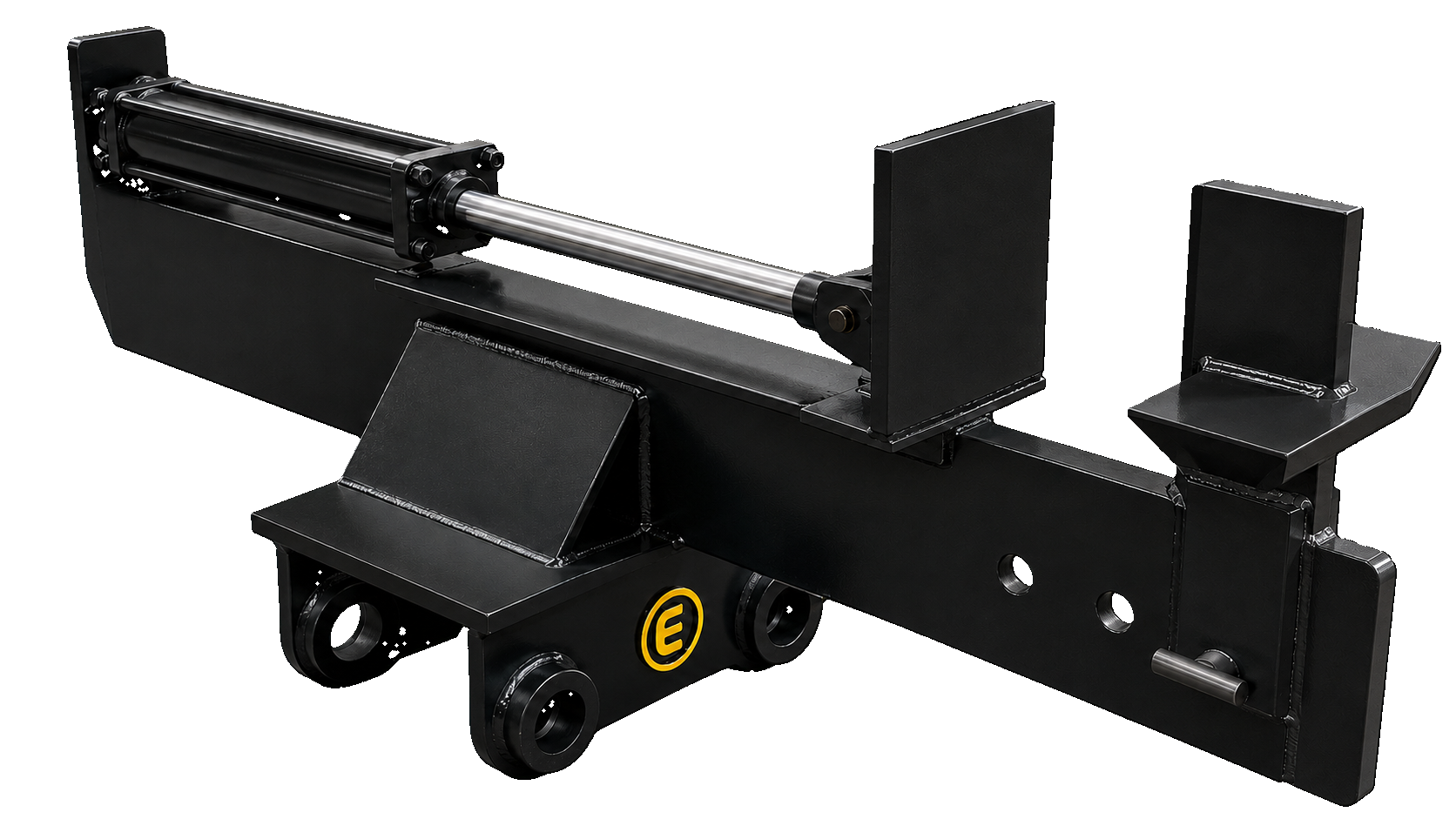
The East Attachments Excavator Log Splitter is built for 4–70 ton machines, with the configuration reviewed for the specific carrier. Provide the excavator make and model, coupler type, mounting photos and required pin-on measurements where applicable.
Share the available auxiliary hydraulic flow and pressure from the machine documentation, along with connection details, for compatibility review. A physical pin fit alone does not confirm hydraulic suitability. Hydraulic hoses and lines are not included; pins are sold separately. Confirm the complete installation requirements with an East Attachments representative.
Keep people clear of the working area and follow the machine and attachment instructions for the approved setup. Stop and secure the equipment before clearing a jam or making adjustments.
Plan for drying, not just splitting.
Splitting fresh wood in November does not make it ready to burn that winter. EPA’s archived Burn Wise guidance recommends seasoning wood for at least six months and checking that moisture content is below 20 percent before burning. Drying time varies with the wood and storage conditions.
Store firewood off the ground with the top covered and sides open for airflow. Leave enough room in your plan for drying and storage, whether the wood is for your own use or a future customer.
Send the shop a useful quote request.
- Excavator make/model, coupler information and mounting photos.
- Available hydraulic specifications and connection details.
- Typical and largest log dimensions, wood condition and photos.
- Expected workload, delivery ZIP code and unloading arrangements.
Approximate lead time is 10–15 working days after required measurement confirmation. Discuss current scheduling and the proposed configuration with the shop. Black and yellow paint options are available, with custom modifications by request.
For the steps before the log pile, read From Clearing to Cleanup. For dimensions, start with our measurement guides.
Further reading
EPA Burn Wise: Best Wood-Burning Practices — archived guidance on seasoning, storage and moisture content.
TURN YOUR LOG PILE INTO A PLAN.
Start with your machine and your wood.
Send the shop your carrier details and log photos to discuss a suitable splitter configuration.