

Machine selection & job planning
Choosing the Right
Excavator
for the Job
The right excavator can reach the work, handle the material and run the attachments you need. Start with the job requirements, then compare the complete machine configuration.
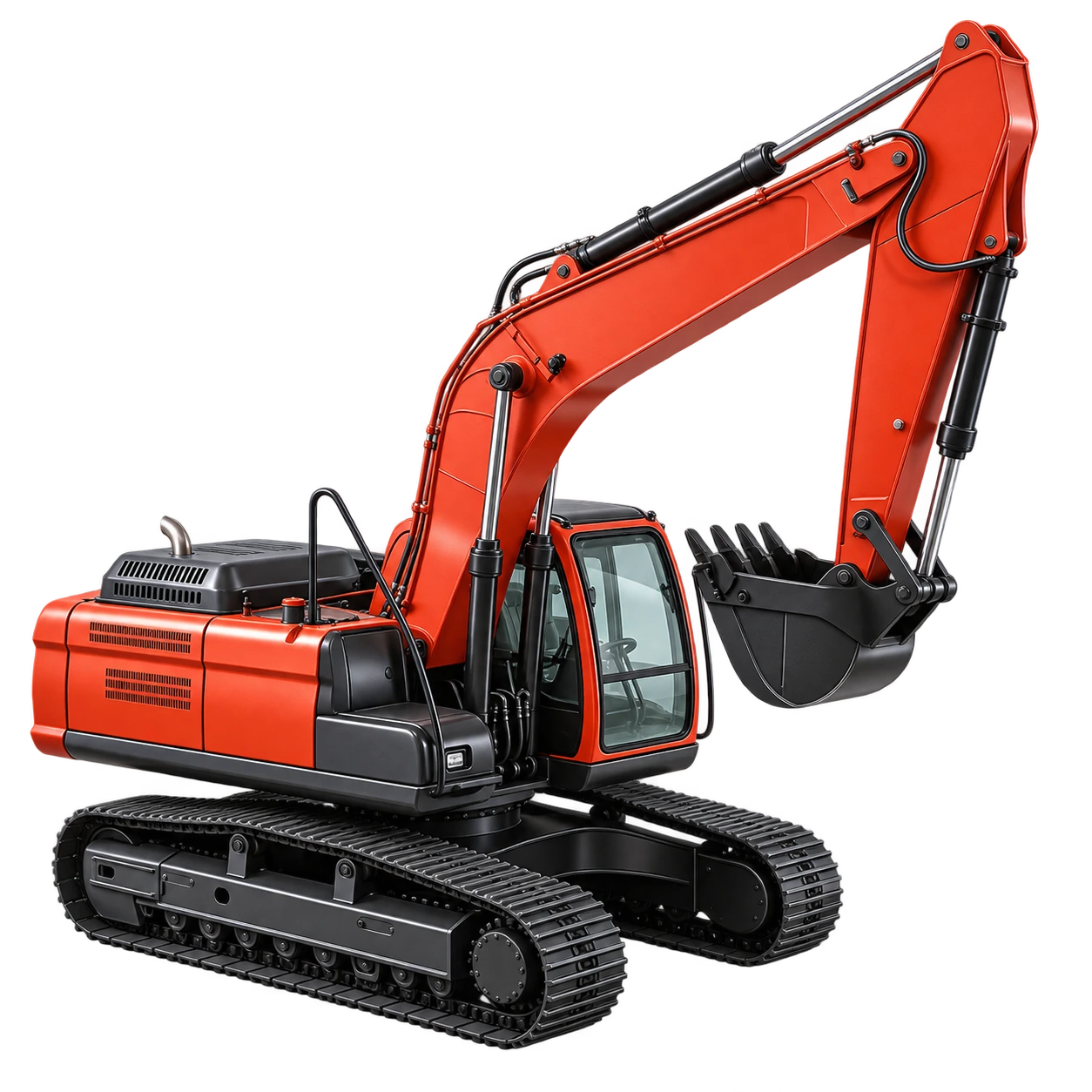
1. Define the work before choosing a size.
Write down the jobs the machine will perform most often: trenching, foundations, drainage, stump removal, loading or handling loose material. Record the material, required depth and reach, expected daily output and space available. A machine that completes an occasional task may still be a poor match for the work that fills your schedule.
Caterpillar’s selection guidance starts with material and bucket requirements, then considers machine configuration. That is a useful approach: compare the capacity you need at the working conditions you actually face, rather than choosing by brand or horsepower alone.
2. Check access and working clearance.
Measure the narrowest entrance, overhead clearance and room to turn and swing. Compare machine width, height and tail-swing dimensions, including the selected tracks and attachment. Reduced-tail-swing configurations can help in confined work, but the boom, bucket and load still need clearance.
Ground support matters too. Describe soft areas, slopes and surfaces that must be protected when discussing a machine with the dealer. Track type and undercarriage configuration should suit the site; a compact footprint alone does not establish safe operating conditions.
3. Compare size classes as a starting point.
Names such as mini, compact, small, medium and large are not universal capacity ratings. Manufacturers group machines differently. Confirm operating weight and the exact boom, arm, counterweight and undercarriage configuration on the specification sheet.
| Job pattern | What to compare | Attachment planning |
|---|---|---|
| Restricted residential access | Compact dimensions, tail swing, required trench depth and transport weight. | A correctly sized trenching or digging bucket; a thumb if material handling is part of the work. |
| Farm and woodland maintenance | Working reach, handling capacity, access routes and auxiliary hydraulics. | Stumper, rake or thumb according to whether material is rooted or already loose. |
| Drainage and finish shaping | Reach at the required profile, control and capacity with the selected bucket. | Ditching, trapezoid or tilting bucket matched to the channel design. |
| Bulk excavation and truck loading | Material density, bucket capacity, loading height, cycle requirements and truck access. | Digging bucket width, teeth and wear protection suited to the material. |
4. Look beyond maximum digging depth.
A maximum-depth number does not describe every useful digging position. Compare the working-range diagram with the actual trench, bank or loading task. Check reach at the needed depth, dump height and where the machine can stand. A longer arm can add reach, but its handling characteristics must be assessed with the exact configuration.
5. Read the lift chart for the actual lift.
Excavator lifting capacity changes with load radius, height, direction and machine setup. Use the manufacturer’s chart for the exact machine and configuration, including the specified blade position where applicable. A headline maximum does not establish capacity at full reach or over the side.
Account for the bucket, coupler, thumb and rigging according to the chart’s notes; do not assume that every chart includes the same equipment. Follow the operating manual and use approved lifting points. Have the dealer review the intended handling task if the chart or configuration is unclear.
6. Match hydraulics and mounting geometry.
Make an attachment list before committing to a machine. Hydraulic tools require compatible auxiliary flow, pressure, circuit configuration and controls. Confirm any return-line or case-drain requirements for the specific tool. More flow is not automatically better when an attachment has a defined operating range.
Physical fit is a separate check. Two excavators in the same weight class can use different pin diameters, pin centers and mounting widths. A quick coupler adds another interface to verify. Start with our measurement guides and bucket fitment checklist, then confirm the complete combination before ordering.
7. Plan transport and ownership costs.
Consider the machine’s actual transport configuration, attachments and hauling arrangement before choosing a larger model. Compare hauling cost alongside rental or purchase payments, fuel, maintenance and local service support. A lower hourly cost can be offset by extra working hours; a larger machine can also add transport expense that your routine jobs do not justify.
If you are deciding between two machines, ask for a demonstration or rental trial with representative work. Compare useful output, operator visibility, control and attachment changes—not just unloaded cycle speed.
Bring this checklist to the dealer.
- Primary tasks, material type and expected daily workload.
- Access width, overhead clearance, ground conditions and available swing space.
- Required digging depth, reach, dump height and any lifting task with load weight and radius.
- Proposed attachments, their weight, mounting details and hydraulic requirements.
- Transport plan, service access and budget for the complete working package.
Once the carrier is selected, East Attachments can help review attachment fitment and configuration. Explore our attachment lineup, compare bucket options or read how to choose an excavator thumb. The machine manufacturer’s ratings remain the starting point for capacity and operating limits.
Further reading.
Caterpillar: right-sizing an excavator; Caterpillar: understanding lift capacity; Caterpillar: attachment selection; Bobcat: compact excavator selection factors; Kubota: matching an excavator to a project. These references explain selection principles; consult current documentation for your exact model.