

NEW PRODUCT · ATTACHMENT SELECTION
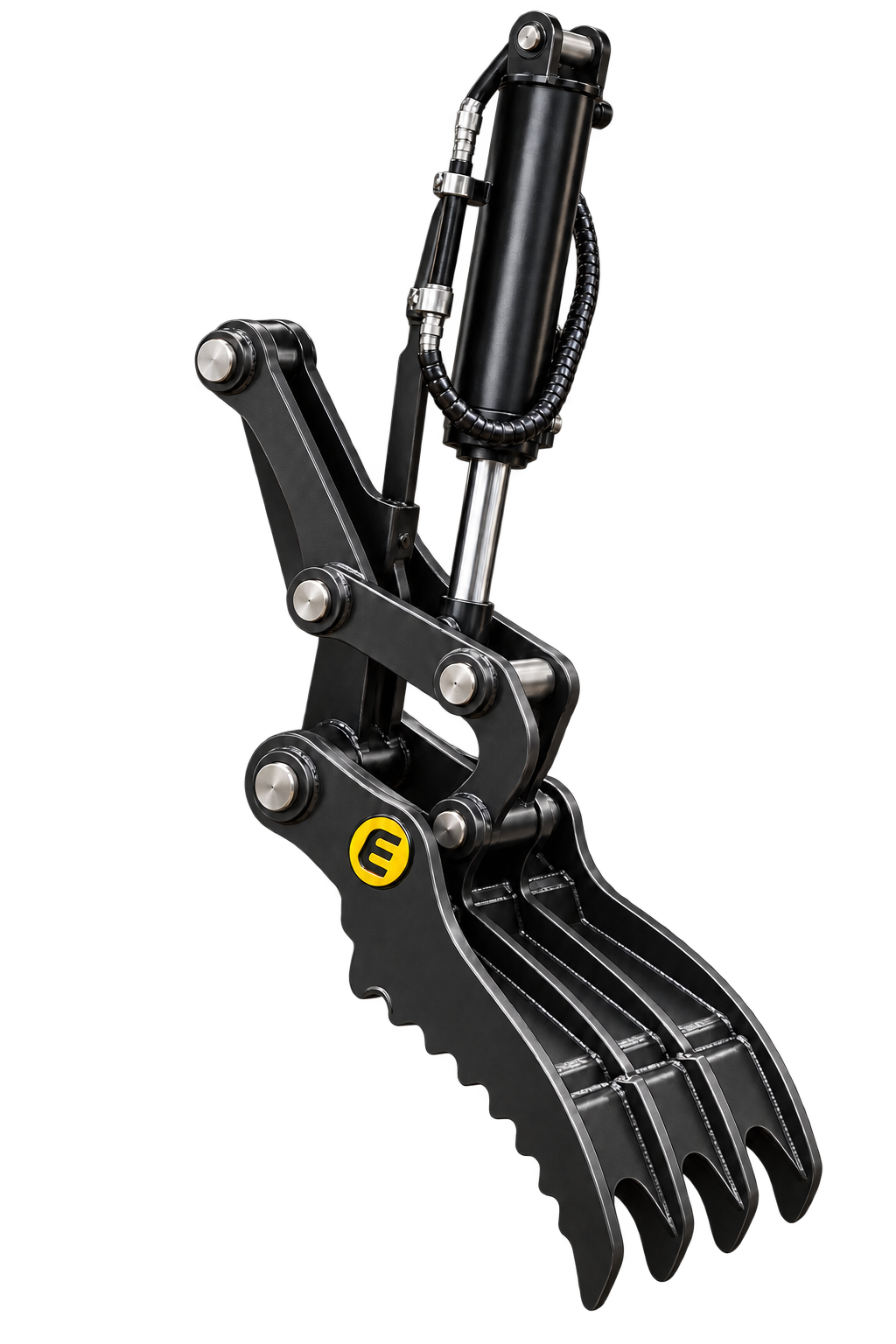
Progressive Link Thumb
vs. Traditional Pin-On Thumb
More useful thumb movement can matter when picking, sorting and placing are a regular part of your day. Here is how to decide whether progressive linkage belongs on your next attachment quote.
What does the extra linkage change?
A thumb gives the bucket an opposing surface for holding logs, brush, rock and other irregular material. A conventional hydraulic pin-on thumb moves under cylinder power. A progressive link thumb adds pivoting links between the cylinder and thumb to extend its working arc.
“Pin-on” describes mounting; “progressive link” describes the operating mechanism. A progressive link thumb can also be pin-mounted. In this comparison, traditional pin-on means a hydraulic thumb without the added progressive linkage.
The practical benefit is more positioning flexibility as the bucket curls and uncurls. Exact travel, contact positions and clearances depend on the complete machine, bucket and coupler arrangement—not simply the product name.
Compare what matters on the job.
| Consideration | Traditional pin-on | Progressive link |
|---|---|---|
| How it moves | The hydraulic cylinder acts on the thumb without an additional progressive linkage. | Additional pivoting links transmit cylinder movement to the thumb. |
| Working range | A more limited arc can suit straightforward picking and holding tasks. | A broader arc gives more opportunities to position the thumb against the bucket. |
| Best reason to choose it | Your regular handling tasks fit comfortably within its available movement. | You repeatedly grip and place material at different bucket positions. |
| Ownership considerations | Fewer linkage joints to inspect and service. | Additional linkage joints require attention to lubrication, wear and clearance. |
| What still needs review | Bucket reach, tooth alignment, coupler geometry and hydraulics. | The same fitment checks, plus linkage travel and folded clearance. |
Where the broader arc earns its place.
Land clearing and brush cleanup
Branches, roots and brush piles rarely present the same grip twice. Additional thumb travel can give the operator more choices for holding uneven material against the bucket. When cleanup means repeated picks throughout the day, those choices may reduce the need to set material down and take another grip.
Log and rock placement
Picking an object up is only part of the job. Setting it down where you want it also matters. A broader working arc can help maintain useful bucket-and-thumb contact through more positions during controlled placement. It does not increase the excavator’s rated lifting capacity.
Sorting mixed cleanup material
When separating bulky pieces from a pile, the material changes shape and orientation with each pick. Progressive linkage is worth considering when your work involves frequent transitions between collecting, holding and placing. Match the thumb width and tine layout to the bucket and material you actually use.
When a traditional pin-on thumb makes sense.
If you mainly dig and only occasionally pick up a log or move a rock, a conventional hydraulic pin-on thumb may provide all the movement you need. Its simpler linkage arrangement also means fewer additional pivot joints to maintain.
For frequent material handling, compare the two builds around a real task: how often must you reposition the bucket, release a grip or move the machine to place an object? That is a stronger basis for choosing than assuming the most complex thumb is always the best purchase.
Ask for the total installed cost, including mounting work, hydraulic setup and any required pins or hardware. A broader working arc may justify the added equipment and upkeep for your application, but no fixed productivity gain or payback period applies to every job.
Fit the thumb to the whole attachment setup.
- Bucket reach and teeth: review bucket width, tooth positions and the intended tine alignment. The parts need working clearance throughout their movement.
- Coupler and pivot geometry: a quick coupler can change the bucket’s position relative to the thumb. Include its make and model, along with every bucket you intend to use.
- Hydraulic compatibility: share available auxiliary flow, pressure and control information. The shop must confirm the requirements for the build.
- Folded position: check how the thumb and linkage stow alongside the stick and how they clear the bucket, coupler and hoses.
The progressive link thumb guide illustrates an 8–12 US ton example (16,000–24,000 lb). That class describes the dimensions of the illustrated build; it does not limit the machines this product can be built for. Send your machine details for a fitment review.
What to know about the East Attachments release.
The new Progressive Link Thumb combines progressive hydraulic linkage, serrated gripping tines and machine-specific fitment. Required pins and mounting hardware are confirmed with your quote. Ask the shop for current build timing after your setup is reviewed.
Hydraulic hoses and hydraulic lines are not included in the order. Include hydraulic connection and routing needs when discussing installation.
Send these details for a useful first inquiry.
- Excavator make, model and operating weight, if known.
- Bucket width, tooth layout and quick-coupler details.
- Clear side and front photos of the stick end, bucket and hookup.
- The materials you handle, typical object sizes and how often you pick and place them.
- Available hydraulic information, delivery location and desired timing.
You do not need every measurement to start. Tell us what you know, and the shop can identify the remaining fitment information. The pin-on thumb alignment sheet and attachment fitment guide help explain what may need checking.
Still comparing manual, weld-on and pin-on options? Read Choosing an Excavator Thumb.
Technical background: Paladin’s excavator thumb overview explains the added rotation of progressive linkage. This article applies that general principle to buying considerations; other manufacturers’ rotation ratings and specifications are not East Attachments specifications.