

Buying guidance · Dozer rakes
Choosing the Right
Dozer Rake
for Your Land-Clearing Work
Start with the blade, then match the rake to the roots, brush and ground conditions ahead. Fitment, tine thickness and penetration depth all belong in the same conversation.
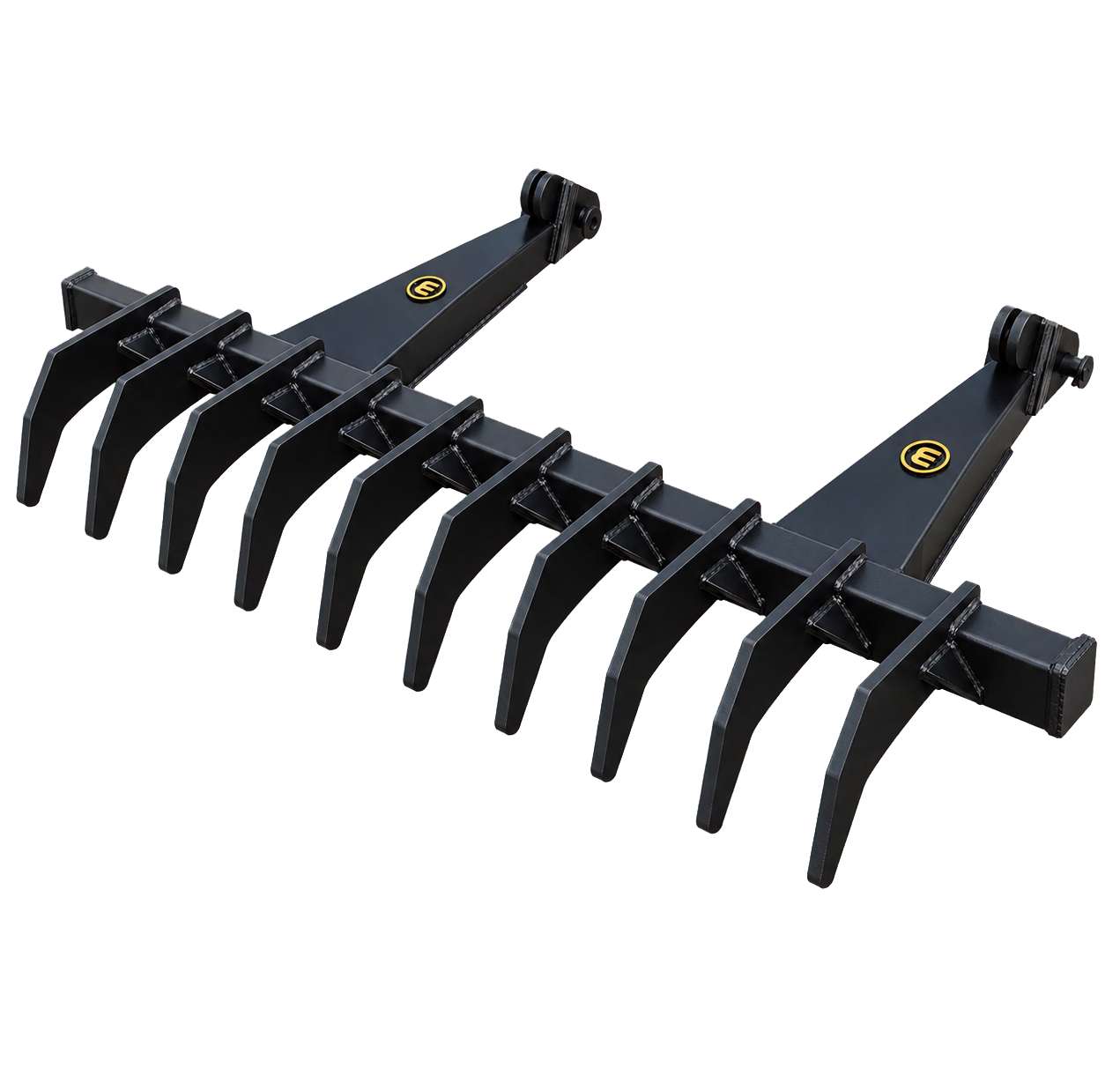
Define the clearing job first.
A dozer rake gathers roots, brush and loose clearing debris across the blade while its open tine arrangement allows loose soil to pass through. That makes it useful when separating woody material from the ground is part of the job.
Tell the shop whether you are cleaning up after tree removal, reclaiming overgrown ground, preparing farm acreage or gathering debris into piles. Include the typical roots and obstacles, soil conditions and how much ground disturbance the finished site can accept. Wet, cohesive soil and tangled root mats behave differently from loose, dry material.
The rake is one part of the clearing plan. Bulk earthmoving, finish grading and handling large stumps may call for different tools or separate passes.
Blade fitment comes before rake size.
A dozer model alone does not describe every blade or mounting arrangement. Send the make and model, blade type, blade width and height, and clear front and side photos. Identify existing mounting brackets, GPS towers and any modifications that could affect clearance.
Use the dozer blade guide sheet: measure the full bottom-edge width from outer edge to outer edge. For height, locate a point 18 inches inward from the outer bottom edge and measure vertically from the bottom cutting edge to the top of the blade.
U-blade-compatible builds are available, with fitment confirmed for the individual machine. Include photos showing the blade profile and mounting areas rather than assuming that matching width establishes compatibility.
Compare tubing, tine thickness and penetration together.
The current dozer rake guide sheet presents these three combinations. They are configuration choices to review with the shop, not automatic matches to a particular dozer model.
| Square tubing | Tine penetration | Tine thickness |
|---|---|---|
| 5 × 5 | 14 inches | 1.25 inches |
| 6 × 6 | 18 inches | 1.5 inches |
| 6 × 6 | 22 inches | 2 inches |
Choose penetration for the work below the surface.
Describe whether most of the job involves loose surface debris or roots and material below it. Greater penetration changes how much ground the tines can engage; it does not guarantee that the dozer will maintain that depth in every soil condition.
Deeper engagement can increase resistance and disturb more ground. Share the expected obstacles and desired finish so the shop can review penetration alongside the carrier and blade setup.
Tine thickness is a build choice, not a capacity rating.
Thickness should be considered with tine geometry, frame construction and the intended use. Do not select the thickest option solely because it is the largest number, or treat a thickness measurement as a guarantee that an unknown obstacle can be moved.
Photos of the site, typical roots and embedded material give the shop a better starting point than “heavy duty” alone. Include occasional difficult work as well as the conditions you expect most days.
When should you discuss a tree spear?
If tree work is a recurring part of the clearing plan, ask whether the optional tree spear would provide a useful additional contact point for the specific task. Explain the material, access and intended use so the shop can confirm whether that option belongs on your build.
For work centered on gathering loose brush and roots, the standard rake may meet the need without that addition. A spear is not a universal tree-size rating or permission to push standing trees; the machine limits, attachment instructions and site conditions still govern the operation.
The optional dozer rake guard, also called a dirt guard, is a separate upgrade. Specify either or both when requesting pricing and ask the shop to confirm the arrangement for your blade.
See the rake at work
Root rake field demonstration.
Watch how the rake gathers material, then compare the visible conditions with your own site. The demonstration shows one setup and application; it does not establish performance for every carrier or ground condition.
Keep the blade measurement sheet and rake configuration sheet available when preparing your inquiry.
Send a quote request the shop can build on.
- Dozer make and model, blade type, bottom-edge width and blade height.
- Front, side and mounting-area photos, including U-blade details, GPS towers or existing brackets.
- Typical clearing material, ground conditions and the result you need.
- Preferred tubing, tine penetration and thickness—or a request for help selecting them.
- Tree spear and dirt guard preferences, plus black or yellow paint.
- Delivery ZIP code or shop pickup, unloading arrangements and target timeline.
Mounting brackets and pins are included with the dozer rake. Confirm the complete configuration, freight and current build timing in your quote. Fabrication timing begins after required measurements are confirmed.
You can start the conversation before every measurement is ready. Review the dozer rake product details for current options and the written weld warranty for coverage.